
Why You Should Give Up on Creative Practices
You are not less creative, or less successful at being creative, if you haven’t found a practice that works for you. Because this is not a one size fits most endeavor. It’s deeply personal. Entirely individual.
And anyone who tells you their method is THE ONE is advertising to you — not trying to actually ascertain if their method, course, book, etc. really is for anyone.
Until you find what works for you.
“Any creative routine pitched by others is wrong. This is the only one.”
“Follow this routine and your creative output will quadruple.”
“For only $29, you too can have the secret to a daily creative routine you’ll never quit.”
Bullshit. All of this.
Creative routines do work. We want them to work. People pitching them get attention and money and sell workbooks and courses and hammer in a methodology that promises to work if you just keep at it… just buy this updated edition… just tell your friends… just keep trying over and over even if you get stuck, then start over and do it more.
Making a living out of helping others be creative is fine — we wouldn’t be doing what we do without those frameworks in place. We’d love to offer free services, but because capitalism we’re just not there yet (subtle call for any nonprofits who might want to partner with us, though).
So just to be clear: whatever practice works for you is good.
Doesn’t matter how you get there, or how many people you tell (or don’t) about it. Doesn’t matter if you spent years figuring it out for yourself, or paid for one book or course and that’s worked for you for 20 years. You have a practice that works for you — and that’s the ideal!
This message is not for you, content in your practice and its stability.
For the rest of us: You are not less creative, or less successful at being creative, if you haven’t found a practice that works for you. Because this is not a one size fits most endeavor. It’s deeply personal. Entirely individual.
And anyone who tells you their method is THE ONE is advertising to you — not trying to actually ascertain if their method, course, book, etc. really is for anyone.
I’ve been there.
I tried The Artist’s Way.
And I hate it.
Not because I hate writing consistently, or don’t want to free my brain of excess thought so I can focus on being more creative, or any of the things that following its guide is supposed to help struggling creatives with.
Because I can’t write every day. I can’t do THREE FULL PAGES every day. And because dumping out what’s in my brain when I’m in periods of depression, burnout, illness, financial insecurity, caretaking, or long term high stress… is not always helpful in dealing with those issues and their effect on my outlook. (Like, when you’re long term depressed, writing out those depressive emotions day after day doesn’t boost yourself out of those feelings.)
I tried 5am writing.
Lasted less than two weeks. I can get up at 6am in the summer. 6:30 when days are shorter. But 5am? Consistently? I’d have to be in bed by 8pm every night. And I need a slow morning. I need at least two sips of coffee to be remotely coherent.
I tried late nights.
Even worse than early mornings. My brain dies too early in the day to rouse my creative brain every evening/night. OR if I get involved in an actual project, I can’t shut my brain off when it’s time to rest.
I tried coloring every evening.
I have arthritis. Sometimes I just can’t. Even when I want to.
I tried alternating activities.
This worked on occasion. And generally is something I encourage — having more than one creative outlet. Not only for the benefit of having multiple ways of expressing yourself, healing yourself, tending to your creative self, but also for working through blocks and finding new things.
But again I failed at every day. Sometimes even every week. Because I chose projects over a process. I tried to hit markers and deadlines to finish things rather than playing.
I tried setting progress goals in a certain timeframe.
I have almost always overshot what I think I can do, and what I actually have time, energy, and drive to do. And while over time I’ve learned to be more realistic with those goals, and to be kinder to myself if I miss a self-imposed deadline, guilt can derail the best intentions time and again.
I tried engaging in creative pursuits after a walk, or a workout.
Chronic fatigue, y’all. Movement rarely gives me energy.
I tried FULLY distraction free. No music, stark environment, no screens.
It’s a fun thing to say, write by candlelight for 20 minutes, as a change of pace.
But every day? No music? Total silence in a bare room? I’ll be mad within a week.
I tried groups and coffee shops.
Again, good for a change of pace. But relying on others as a routine isn’t sustainable or realistic. And if the sound gets to be too much, I will lose focus and then want to flip tables.
I tried a daily practice.
Now, that works more often than not with small tasks. 3 simple activities that take less than 20 minutes. It’s the most consistent I’ve been.
But every day? Without fail? Absolutely not.
I tried. I tried. I tried.
And yet…
Anytime I’m away from creating for more than a week I feel the impact. I feel the loss. It bleeds into everything else.
So what is my routine?
It changes. Season to season. Year to year in my life. Because I change. I grow and recede. My needs shift. My energy shifts — like a lot, and often.
But in trying, and failing, with numerous methods I’ve found options that work. No one, singular method. But a collection of small, simple activities that contribute to my wellbeing. The more I do, the better I feel.
When life doesn’t allow for that 15-20 minutes every day, doing just five minutes every couple days, or as often as I can, is better than failing at someone else’s singular method that’s supposed to be the answer to everything.
Nothing is THE answer.
Doing what we can, what makes us thrive, what the absence of makes us feel less than — doing that activity as often as we are able, that’s the only answer.
And it’s different for everyone.
As it should be.
Coffee Mishap Metaphors
Your creative practice is part of your life. Practice doesn’t mean every day you create a masterpiece. It does mean you build on your experience day by day, deal with the spills as they come, and move on.
Recently I had my first coffee breakdown in quite a while. However this one wasn’t caused by what I have named the ‘I Need Coffee To Make Coffee’ phenomenon. Like when you setup your pourover and go to add your grounds only to almost dump whole beans straight from the bag. Or when you prep your machine the night before with everything but water and then completely forget that come morning and spend five minutes trying to figure out why the machine isn’t working.
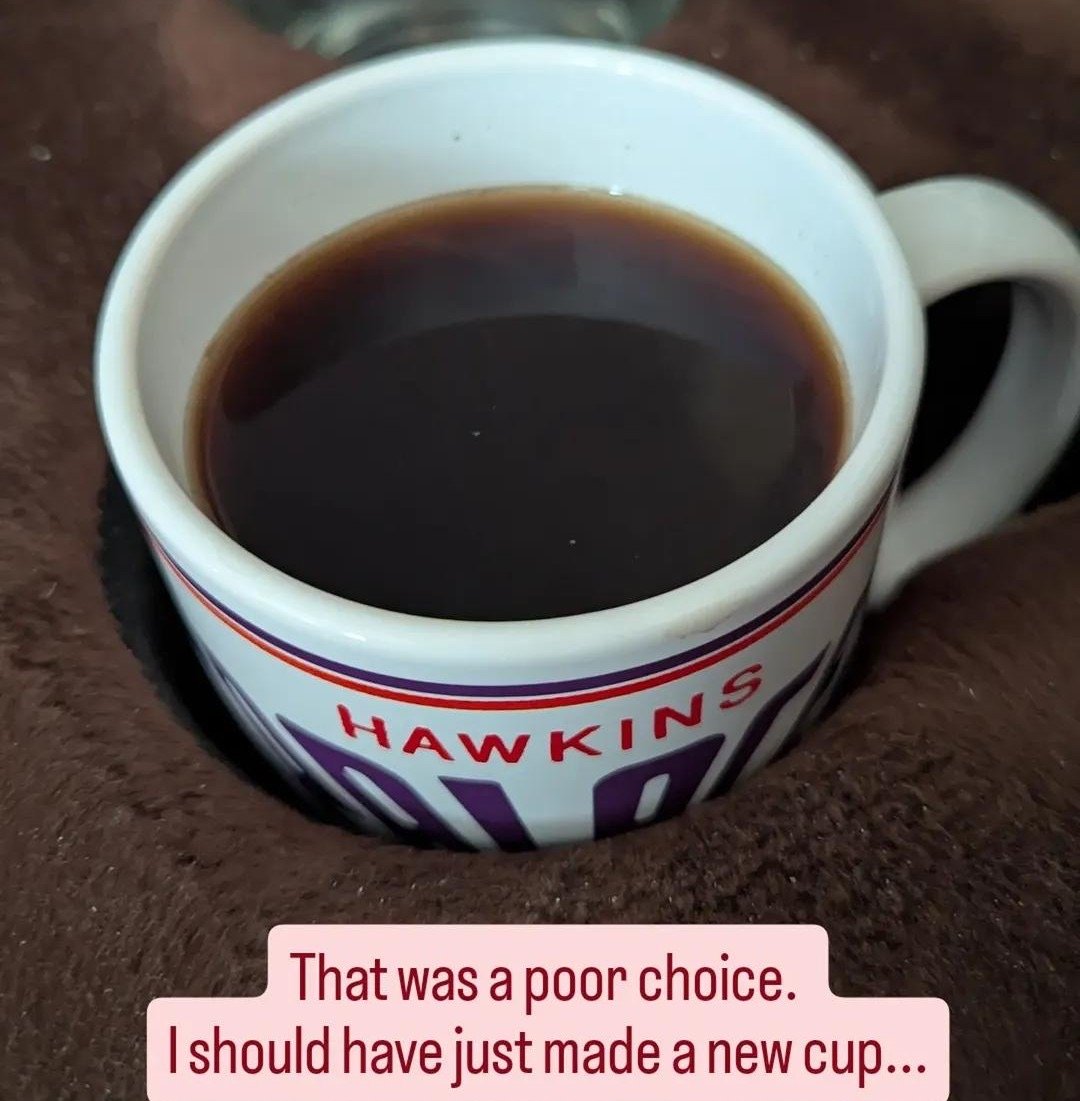
This was an equipment failure. For the first time ever while making a pourover, the paper liner split at the base, filling my waiting mug with hot water and grounds sludge. And as someone who usually uses the cheapest filters possible, having this break come from one of the wayward fancy, brown paper, organic, expensive filters was more than a little frustrating.
And yet…
It struck me as a good metaphor for creating, especially creating regularly. Because when something becomes a fluid habit, it’s easy to expect it to go the same all the time. Whether that’s making coffee, brushing your teeth, or doing your daily sketches. The result may vary, and some days you even feel accomplished with your efforts. (Who hasn’t made a great cup of tea or coffee and thought you did a damn fine job?)
But sometimes that regular, predictable journey gets jostled. You knock over the toothbrush holder and it breaks as it hits the floor. See above re: coffee flub. Your pencil breaks mid-line.
You keep going. You don’t abandon the work you already put in. Rinse the toothbrush and put it on a towel while you look for a spare cup. Set up another mug with a new filter and pour the whole mug of dredgy mess into it. Grab a different pencil.
You complete the routine and… the result isn’t great. In your distraction you missed a bit of breakfast caught in your teeth, feeling it wedged in there on the commute to work. The repoured coffee is weak as hell. The scratch from the broken lead has marred an otherwise skillful drawing.
It’s natural to be frustrated by this as much as it is to be frustrated by trying to write a blog post and having heavy tree trimming machinery grinding away outside on an otherwise mild and calm day.
Still, these aren’t reasons to stop, in the moment or the following day. They might lead to discoveries about changing up the routine or its process. Or it might be one frustrating detour in an otherwise smooth week (or month). You might have another mishap tomorrow. It’s part of the journey. Your creative practice is part of your life. Practice doesn’t mean every day you create a masterpiece. It does mean you build on your experience day by day, deal with the spills as they come, and move on. Because it’s part of your life. It’s an essential part of finding who you are, how you see the world, how you express yourself.
It might even be more important than coffee…
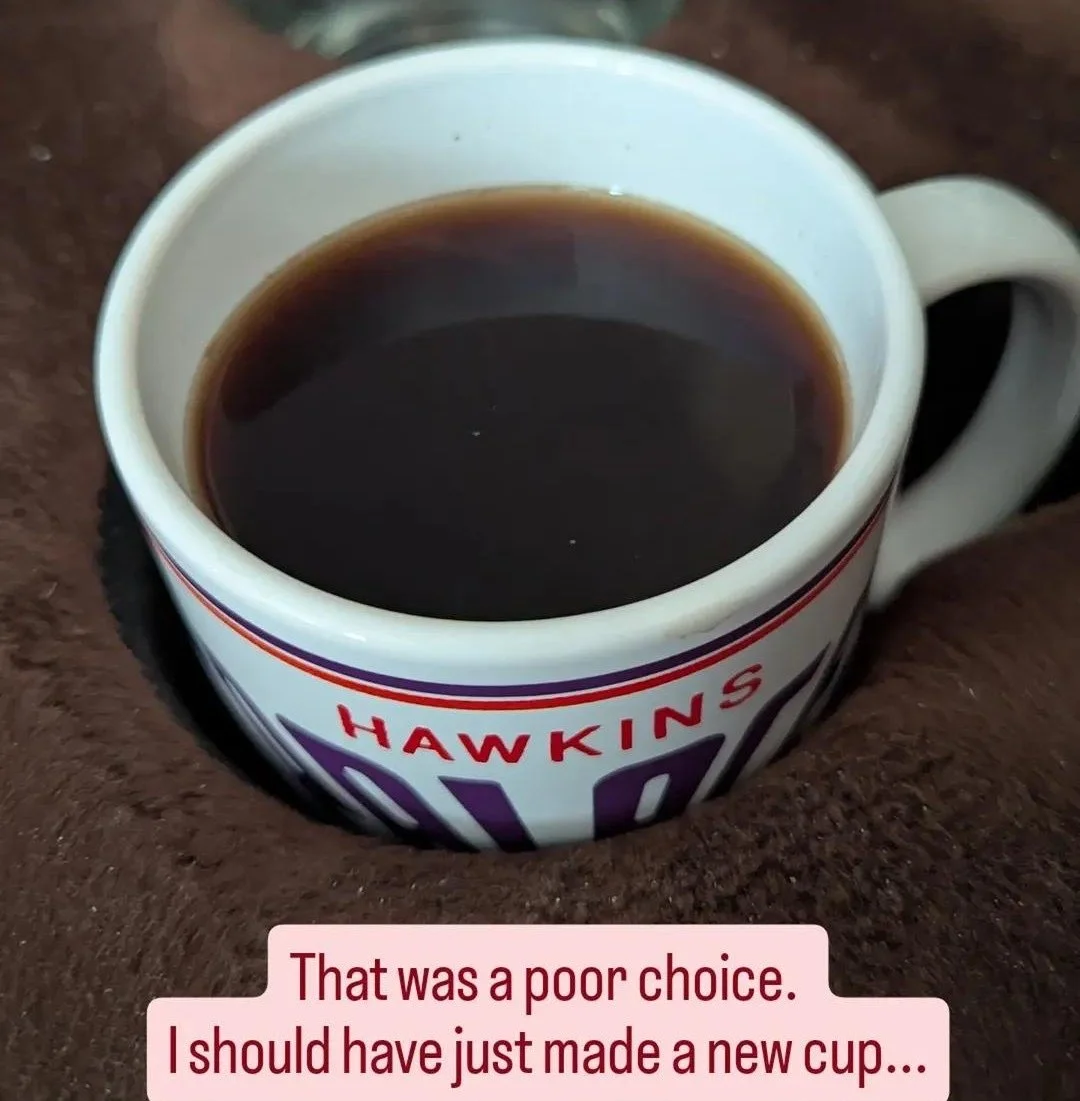
At least weak, refiltered coffee…
Let’s Groove
Getting back into a creative groove has no simple, direct method that works for everyone. Nor does it necessarily happen that what works to bring you out of one creative funk will work for the next.
Options are great, but there’s also the danger of decision paralysis. Also, to have options that work, you not only have to research them, but test them to see if they work for you. That in itself is a journey, and not everyone has the capacity to detail and track what works.
Getting back into a creative groove has no simple, direct method that works for everyone. Nor does it necessarily happen that what works to bring you out of one creative funk will work for the next.
Options are great, but there’s also the danger of decision paralysis. Also, to have options that work, you not only have to research them, but test them to see if they work for you. That in itself is a journey, and not everyone has the capacity to detail and track what works.
So we get stuck. And we just… don’t create again for awhile.
Sometimes that’s ok. Good, even. Sometimes, funk or not, we need the rest. We need to recalibrate and refill our cups. Especially when we’ve come off a major project or life event or are in/recovering from burnout.
Part of our process in the spaces we curate is figuring out all of the above and assessing if now is the right time to dive back into creative endeavors.
But also: a regular creative practice isn’t just there to bring you out of a funk, or recover from an empty well, or heal all your wounds. Not immediately. Not necessarily with perceptible shifts, at least not until it’s a regular part of your life when it wasn’t before (or wasn’t done sustainably before).
The thing is, a regular creative practice is just that. Practicing at being creative. It’s not diving into the next novel or painting to chase an artistic high (or cope with the feelings of a life low). It’s not when you plan out your cookbook. It’s not storyboarding ideas for your next movie. It’s not forcing when the well is dry, either.
It’s building, incrementally, a way to express yourself when other methods fail. It’s working muscles (primarily your brain, but also dexterity, coordination, etc.) regularly to keep them agile. It’s allowing yourself, time after time, to play, to live in mess and uncertainty that could result in something amazing. It’s letting yourself find yourself. And that’s a practice that is needed throughout your whole life.
Even if you need breaks.
Want to (re)find that groove? Without shame for how long it’s been? Without chiding about needing to create daily or intensely? It’s what we’re here for.
It’s ok to be a Creative Maximalist
One of the basics of neurospicy household management, or even just those who have trouble keeping things tidy, is to make an accessible place for the thing you regularly use — or want to. Put things front and center, make them easy to grab and easy to put away.
But what happens when you do that and still those craft supplies go unused?
It’s ok to be a Creative Maximalist (Just USE what you have)
Maximalism gets unfairly shoehorned into a lot of content that champions decluttering, and particularly content that sees a minimalist, stark environment as an ‘ethical’ choice for environmental, creative, mental, and even general health. Here’s the thing: a cluttered space can absolutely influence our living states. But there’s a difference between cluttered (and certainly hoarding) environments, and a maximalist environment. Some of us actually do thrive on having knick-knacks on our desks, walls and fridges full of creative expression, a heap of cozy blankets and throw pillows of different colors and textures, and even a mountain of craft supplies.
The catch, for any ‘style’ of living is: do you use the things you have, or are you trying to fill your space with more to compensate for other issues in your life?
And the big one for creatives: Do you use the things you have, or are you ignoring them out of fear (of not being perfect, of wasting the ‘good’ supplies, of starting and not having time to finish, of — of — of —)…
One of the basics of neurospicy household management, or even just those who have trouble keeping things tidy, is to make an accessible place for the thing you regularly use — or want to. Put things front and center, make them easy to grab and easy to put away.
But what happens when you do that and still those craft supplies go unused?
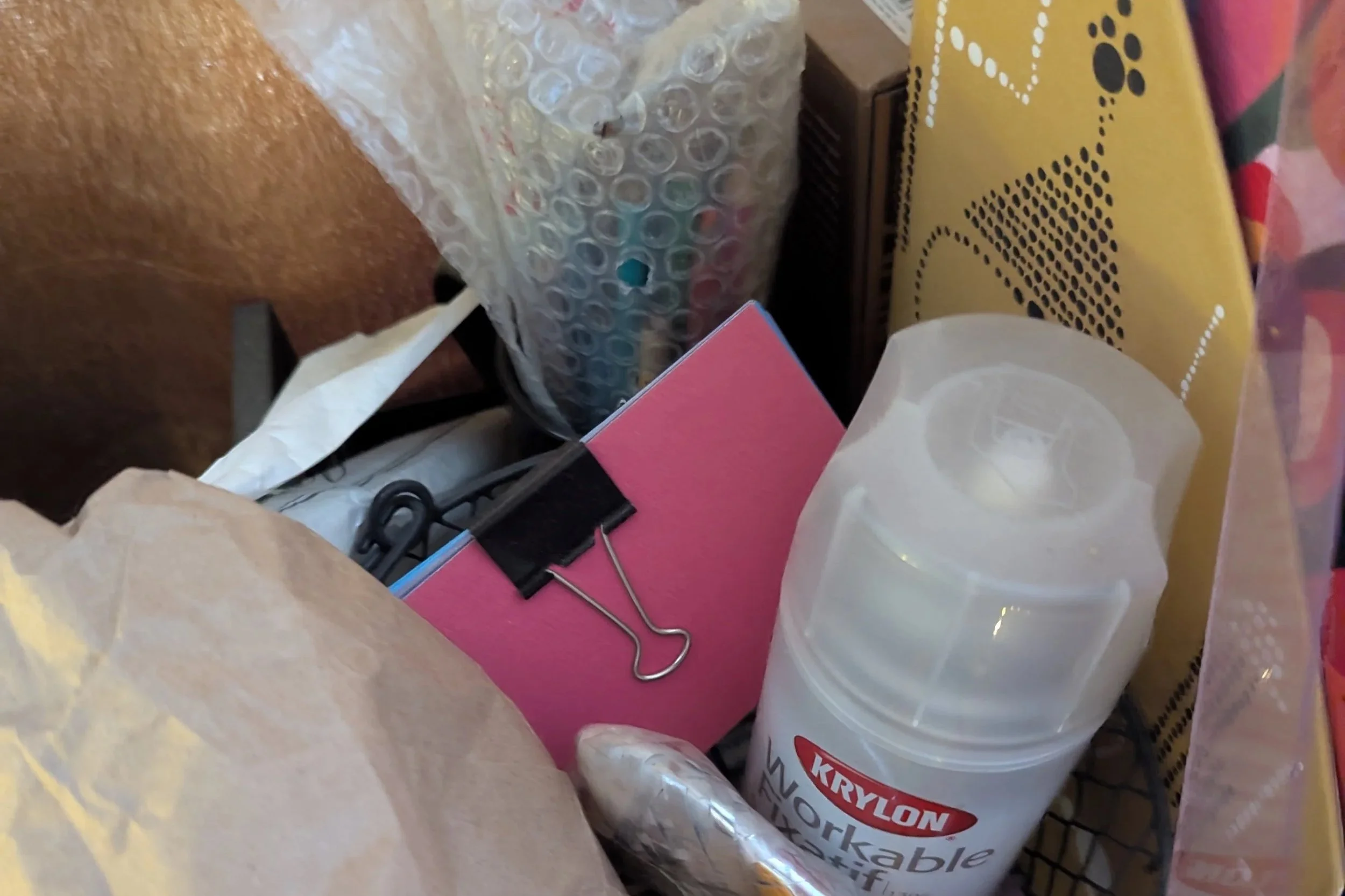
If you’re like me, they sit on a cart beside your desk taunting you daily as you occasionally add another item to the already stacked cart (long ago turned into a glorified storage bin instead of a place to easily grab items and get crafting).
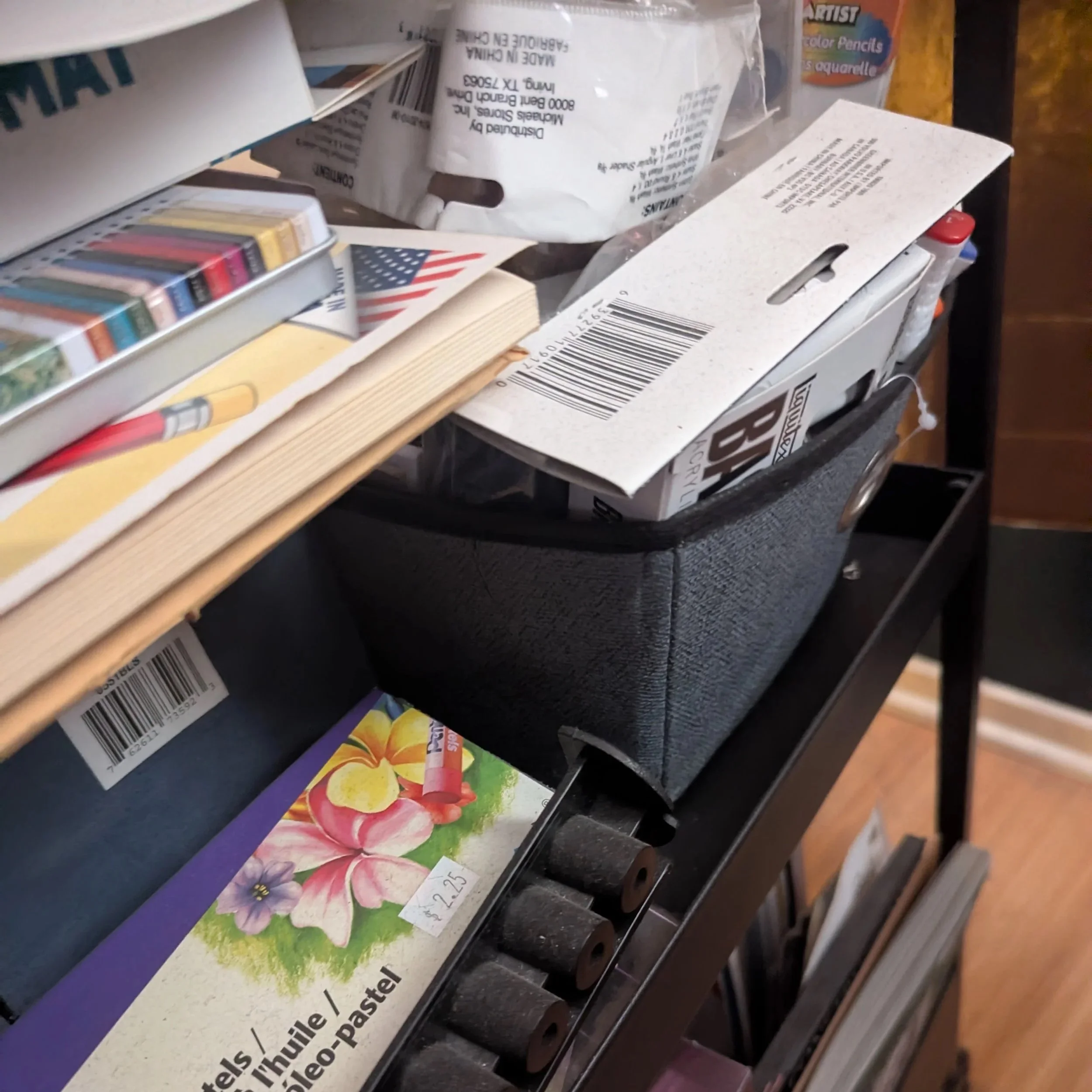
Dust and all…
As a maximalist who embraces multiple creative outlets, it’s hard to let go of things. To acknowledge that you’re just not into that thing you said you wanted to get into. It’s also hard to reach for that pristine set of markers just to doodle (what a waste). But if your cart, or bin, or shelves have reached a point where accessing anything beyond a cup of colored pencils is no longer easy, it’s time to face those tough thoughts and feelings. It’s time to review everything — see what you really want to use, move the items that don’t belong there (puzzles are like crafts, so they should go on the craft cart, right??), and part with the items that don’t serve your creative self right now.
If items are still in good (or unopened) condition and you can’t bear to part with them, put them in a bin to look at in six months. Set a calendar reminder — or three — and actually go through stuff again then. If you can bear to part with them, you could sell them online, or donate them to a local charity, school, or virtual neighborhood group. If things aren’t really usable, toss them.
Once everything has been assessed, appropriately moved, and reset in its designated place, it’s time to commit to the mental work.
You have these items. They are items to create. So why aren’t you creating?
You removed every possible barrier standing between you and making stuff. So what’s stopping you?
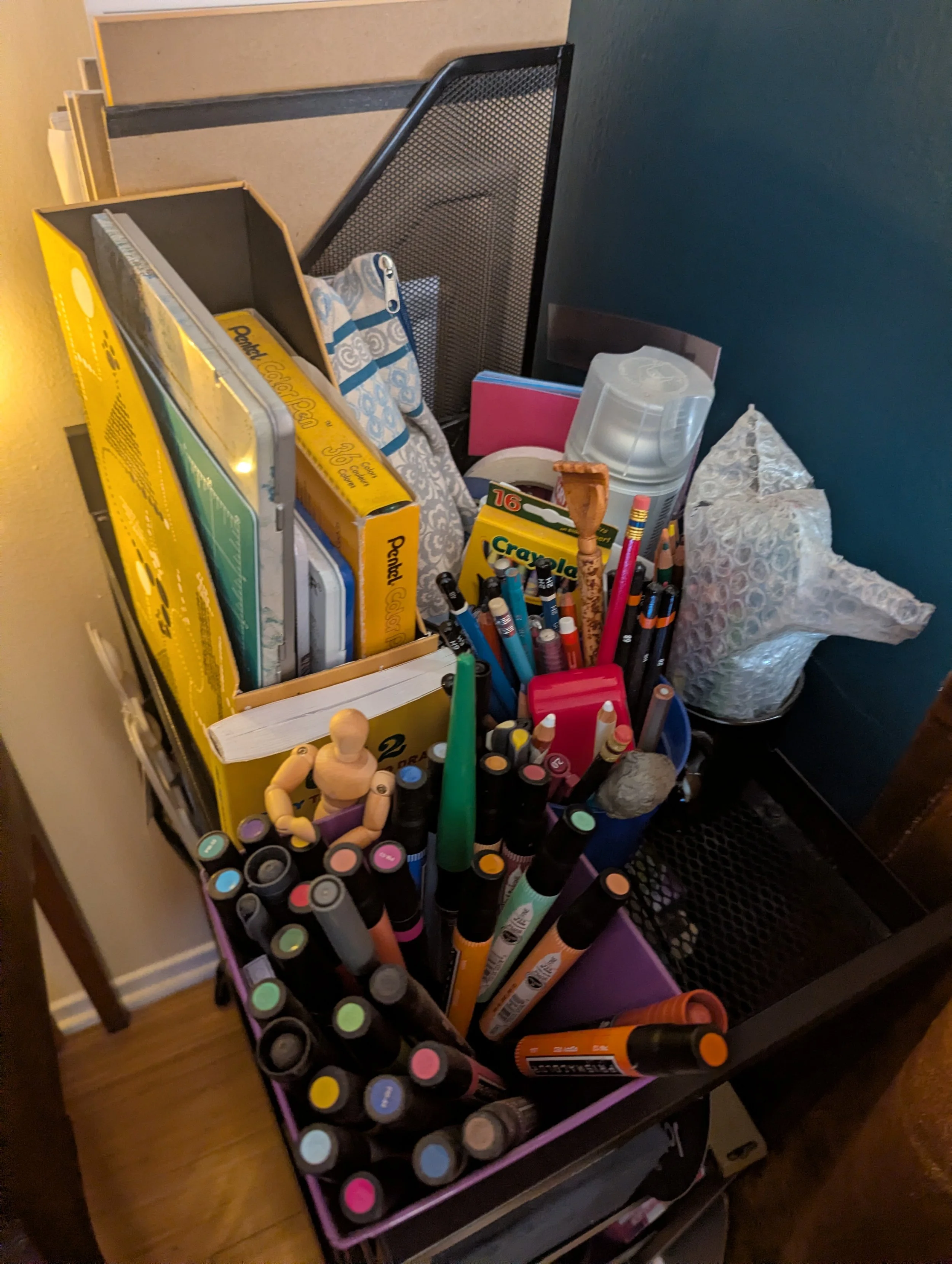
What’s the blockage now?
No One Can ‘Fix’ Your Burnout
Until you can eliminate the conditions causing your burnout AND rest AND are in a place of security to start healing from it, you’re going to get stuck, get frustrated, and overwhelm yourself thinking you’re broken (or you’re ‘fixed’ when all you’ve really done is covered up or pushed aside the burnout to deal with later), or pin your hopes on a person, product, or system that will do the healing for you.
None of this is to say it can’t be done.
All of this to say: if any individual or company or mouthpiece or product tells you they have the path to fix your burnout — it’s a lie.
The factors that cause burnout are external, feeding into internal, and personal, issues across our physical, mental, emotional, spiritual, creative and truly whole selves. We become tied into operating under conditions of burnout, and when we finally recognize and acknowledge it, it feels like something we’ve done to ourselves. Yet often, while we might have been able to see the flags sooner and made a few different choices to ease the level of burnout, once we’re on that path it’s incredibly difficult to avoid.
Burnout (and pushing through it) becomes habit. And habits are difficult to break.
When we seek help, conflicting messages come in. Even the most well meaning friends and professionals will say that burnout can be fixed — just try this method, this coach, this therapist, this time management program, this self care product, this class, this book, this content creator’s videos (and the 70 others the algorithm then feeds you). Yet none of those address the root causes of your burnout, nor can they do the essential work of removing those causes AND actively healing you. Because let’s face it: even if you’re ready to overcome your burnout, if the things causing are still in your life and cannot be removed, it’s going to take exponentially more, deeper work to cope with actively being in burnout, with the things that caused it, while trying to heal enough to feel a little better and find a way to eventually divest from those causes.
You can be (and hopefully are or have been) supported on your journey of healing from burnout. You can be provided tools for coping with life in the midst of, and working through to get over burnout. But there is no external fix that will happen from another person — especially not someone selling you that fix.
Until you can eliminate the conditions causing your burnout AND rest AND are in a place of security to start healing from it, you’re going to get stuck, get frustrated, and overwhelm yourself thinking you’re broken (or you’re ‘fixed’ when all you’ve really done is covered up or pushed aside the burnout to deal with later), or pin your hopes on a person, product, or system that will do the healing for you.
None of this is to say it can’t be done.
All of this to say: if any individual or company or mouthpiece or product tells you they have the path to fix your burnout — it’s a lie.
They may have tools to help you recognize the causes, and methods of dealing with them while you try to find ways of removing them from your life. They may have suggestions of what to do when you have actually gotten rid of those external causes — how to use your time and energy to start healing. They may have techniques, or workbooks, or courses of options to assist your healing journey. And all of these things can be helpful. But you ultimately have the work to do yourself. No one else, sadly, can actually cure your burnout.
When we work with clients who are actively burned out, or recovering from periods of burn out, we are not trying to find a creative practice that will make them feel whole again. We don’t promise, ever, to heal the trauma caused by having their creative soul sucked away. We can’t hand you a workbook that gives you creative activities to do for just ten minutes a day to feel like your best self again.
Because while a consistent, sustainable creative practice can do an enormous, and essential, amount of good for our brains, bodies, and souls, none of that work alone will heal your burn out, or remove what’s causing it.
We know that. We acknowledge it. And we call bullshit on anyone saying they alone have the answers to fix you (via their exclusive method, workshop, class, workbook, product, whatever).
How Forcing Consistency is Making Creativity Harder
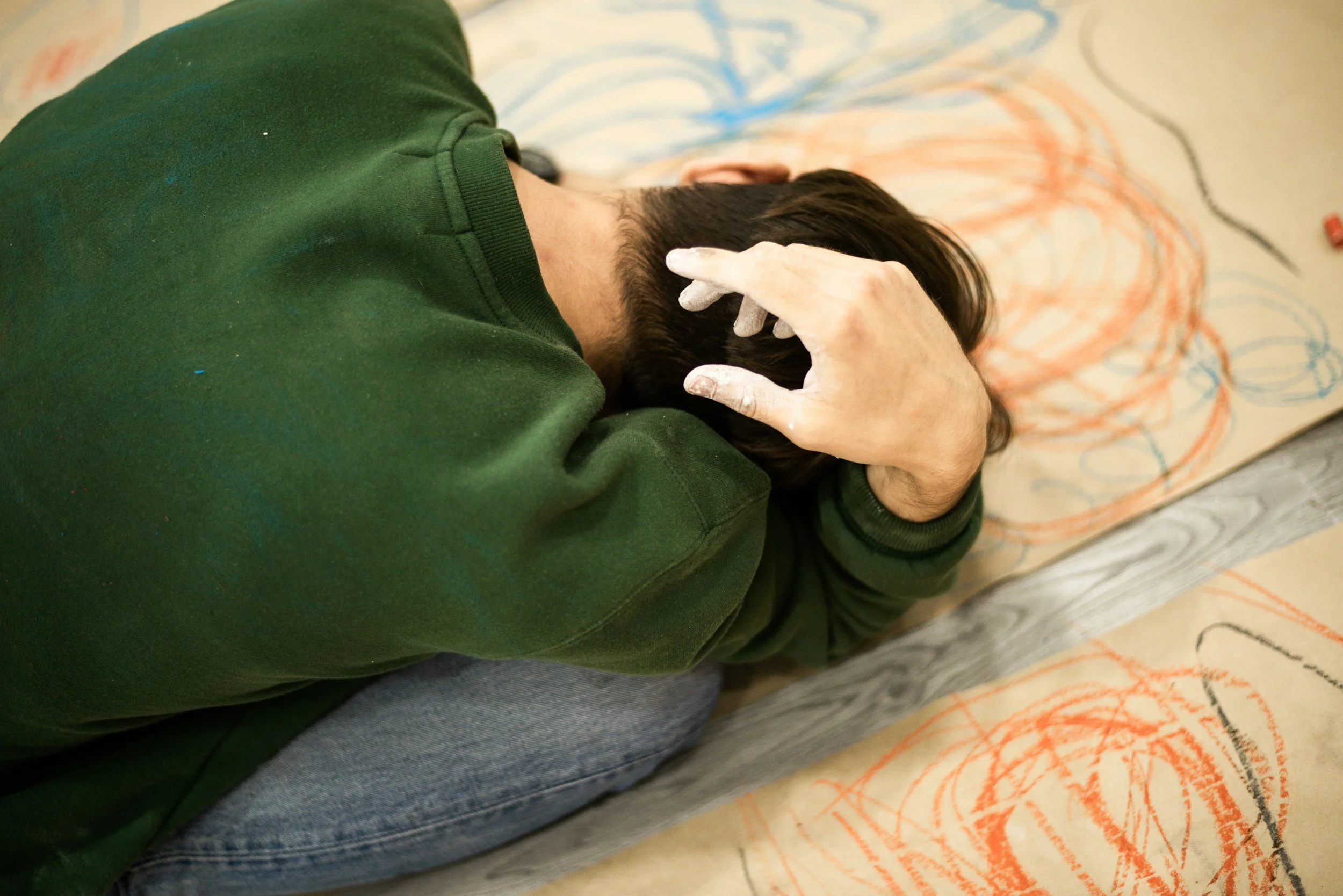
Picking a daily routine to build consistency works for some. But forcing a routine on someone who isn’t ready for it, without backup, without acknowledging the pitfalls and difficulties they’ll face, without a secondary option, is setting them up for failure (and we’re not just talking about a creative practice routine now).
In order to improve at a skill, you have to practice. And practice. And keep practicing.
A creative practice benefits your wellbeing and enjoyment of life, and its purpose, but it’s not something you have to do everyday.
There’s always conflicting opinions of what it takes to be a ‘good’ creative. We’ve seen this ‘advice’ repeatedly. Most of it nearly impossible for the majority of people who don’t already make a comfortable living as a creative. And even those who do sometimes struggle with the consistency of an every day practice.
Whether it’s writing an hour a day (at 5am if that’s your only window), slogging through The Artist’s Way, cramming all your creative time into a two-week retreat in the mountains to ‘get back that spark,’ or drawing every day no matter how you feel, where you are, or what is happening in your life.
Enforcing the idea that a consistent practice has to be a daily one is impractical at best, and potentially harmful to the point of people abandoning their creative self altogether at worst — something we have seen numerous times, and experienced.
So what does consistency really mean?
A daily practice is great if it’s sustainable for your life. It’s not always easy, but it’s often more feasible if you make the practice small enough and give yourself grace when life gets chaotic and you step away for a few days (or weeks — it’s your practice after all). Incorporating a practice into your routine is a lifestyle change, and it takes trial and error to find what works for your life and creative goals. But, that routine does not have to be daily. Ever.
If your goal is to become a better writer and finish a novel draft in six months, that is achievable without writing every day. The more regularly you write, the easier it will be for a habit to form, even if your habit is two hours every Sunday. It’s also a better way to build that into your life rather than burning out by trying to cram that into a three week window. (Someday we’ll talk about the positive and negative facets of the now-defunct National Novel Writing Month in regards to speed-running through a full draft in 30 days.) However, only you can learn and know and adapt to your best routine.
Picking a daily routine to build consistency works for some. But forcing a routine on someone who isn’t ready for it, without backup, without acknowledging the pitfalls and difficulties they’ll face, without a secondary option, is setting them up for failure (and we’re not just talking about a creative practice routine now).
A sustainable creative practice is one you enjoy doing (even when it’s hard), that fulfills you (even when not everything does), that works your mind and body in a way that feeds your overall wellbeing (even though at times it seems frivolous and indulgent to tend to anything other than the basic ‘essentials’ of surviving your day to day life). That may not be achievable or realistic to do daily until you’ve calibrated your life to accept this routine, and its effects, as necessary. That’s not a small block to overcome. Worrying about the perceived ideal of being a ‘consistent artist’ while building this can make you want to quit.
Quitting is what this busy world, over reliant on tech and selling and consuming and productivity, wants you to do. Creating a false narrative that makes you feel guilty or unworthy of finding ways to express yourself through art, music, design, cooking, textiles, photography, etc. feeds into the global consumerist idea that we exist to produce, consume, spend, and repeat. And to do it loudly, publicly, so the algorithm knows what our hopes and insecurities are.
That kind of idealized consistency narrative harms every aspect of what a creative practice needs to be in order to support you as a human. A practice is just that: practice. Even when you’re an expert, you still need to warm up, to keep trying new things, to flex those creative muscles to stay limber in your field. But you also have to learn to listen to your body, your mind, observe your own habits, needs, goals, and align them in a way that feels not only doable but something you want to try to make happen as often as possible — even if that currently is only five minutes a day, twice a week.
All progress is good progress (though it’s not all linear…). All practice is meaningful practice. But only when you’re doing it for you. And you alone get to decide what consistency looks like for you.
Need support figuring that out? Sticking with it? Reminding you that your practice is for your benefit and not that of any algorithm?
That’s what we’re here for.
The Summer 2026 Reset
You don't need a full-scale retreat to recalibrate. You DO need a strategic intervention.
Our Summer Reset Special is a high-impact, one-time intensive designed to help you reassert your creative time and map out a sustainable path.
We’ve officially hit the midpoint of 2026. For industry creatives and creative-adjacent professionals, July and August usually bring a quiet wave of panic for your personal projects (whether they’re for passion or a paycheck). You look at the ambitious goals you set back in January, and realize they still sit there, taunting you.
Sometimes pressure fuels us. More often, it makes us freeze. We look at nebulous goals without markers, overestimate our capacity, and let projects stall because burnout feels inescapable.
You don't need a full-scale retreat to recalibrate. You DO need a strategic intervention.
Our Summer Reset Special is a high-impact, one-time intensive designed to help you reassert your creative time and map out a sustainable path. We’ll look at your time, energy, and current setbacks to give you a compassionate but firm reality check. Together, we’ll separate what’s actually achievable (and/or on a necessary deadline) from what needs to be pushed to "someday."
Here’s how the session works:
Analog Pre-Work: Grab your favorite notebook. You’ll physically write down answers to a few core prompts to get into the right headspace before we meet.
75-Minute Intensive: We audit your burnout, assess your deadlines, and build a blueprint for the rest of the year — together.
Asset Bundle: You’ll receive our premium Creative Reset Workbook (typically exclusive to our full retreats) and a customized, visual blueprint delivered to your inbox 48 hours later.
Accountability Check-In: An asynchronous check-in three weeks later to help you tweak the plan as you execute.
Whether you're stuck creatively or logistically, we can help you (re)build a practice that is consistent, sustainable, enjoyable, and realistic.
This offer is strictly limited to 15 spots and sessions must be scheduled in July or August. All you need is yourself, a laptop, and your favorite pen.
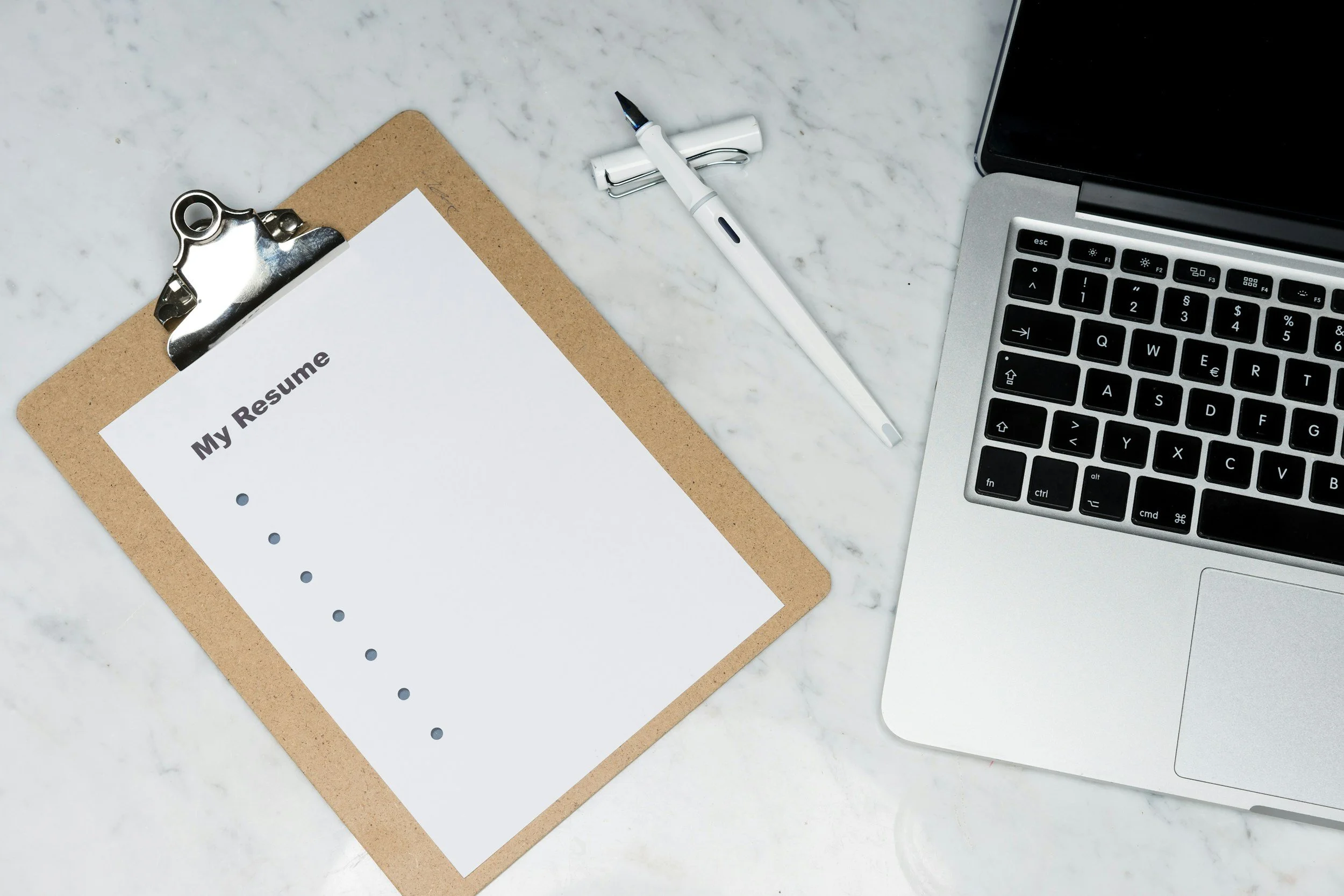
Creativity Is a Relationship, Not a Résumé
Creativity is a relationship with yourself. There’s no linear trajectory. No C-suite position to achieve. No analysis needed to show ROI.
If you’re a creative, you’re likely familiar with questions from friends, family, co-workers, strangers etc. that are well-meaning but feel like they’re probing your projects and experience.
What are you working on now?
What inspires you?
What are your goals with this?
Where do you see this in five years?
While often coming from a place of trying to connect and understand, they can feel like an interrogation. A push to justify your practice into something quantifiable, professional, productive and meaningful (in a ‘business’ context).
And if you haven’t spent years trying to make others understand the value of creating just to create — to enhance your life overall and not necessarily parlay your skill into a commodity (or even if you do, why not choose stable, sensible work like an analyst, doctor, lawyer, etc.) — you may struggle to ‘prove’ value to others. Experience this enough and you may struggle to believe in the value for yourself.
The value in creating is intrinsic. It isn’t an item on a list of skills and statistics of your life, professional or otherwise.
Creativity is a relationship with yourself. There’s no linear trajectory. No C-suite position to achieve. No analysis needed to show ROI.
Relationships, even the best ones, get messy. They are full of emotion, of mental gymnastics, of trying and failing again and again. They can occasionally be toxic, even when you want them to be fulfilling. They require attention, care, communication and yes, work.
Sometimes you need a break. A reset. That’s not failure. It usually means something shifted: capacity, safety, understanding, energy… acceptance.
A creative practice or endeavor can stop or shift as we change because we are changing. What interested, inspired, or motivated you at fifteen may not at thirty, and what you dedicate years of learning and exploring to at thirty may be physically or mentally draining at fifty.
Creativity isn’t fueled by pushing through when you’re strained, ill, exhausted. You can discipline yourself to still explore creativity in these times, but eventually you have to adjust.
A lot of advice on building creative practices focuses on consistency, inflexibility, and driving yourself to produce more, learn more, become an expert.
That’s not how we find our best selves, creatively or generally.
We need time to explore. To learn not through pushing beyond our capacity but by understanding and working with it.
The relationship requires nurturing and understanding. Not justification, an ultimate achievement or quantifiable output.
Your creative practice may never be perfect. It may never be profitable. But you get to decide your working conditions, your deadlines, your goals, and your start date.
You can start, or restart, anytime. BUT you might have to develop trust and understanding. You’ll need to be vulnerable.
It’s alright to ask for help, too. What you create may be alone in a corner of your room, but creativity thrives with community. You don’t have to share what you make. But finding fellow creatives who understand all of the above, who nurture and uplift the practice itself, can bolster you in fallow and stressful times.
There’s the evergreen advice of ‘just start’ — whether you’re a beginner or a burned out professional or anyone in between. Sometimes that’s easier said than done.
So we’re going to reframe it:
How do you feel about starting?
What is holding you back from doing five minutes of creative exploration twice a week?
How can you feel supported in starting and, hopefully, continuing a creative practice?
If answering these feels daunting, or exciting, or wondering what’s next… reach out. Let’s see what you need to build a healthy creative relationship with yourself.

What If You Stopped Trying to ‘Prove’ Your Creativity?
The whole concept of having to perform or prove ourselves as creatives negates the individualized specialness of creating in the first place. Only you can create what speaks to your inner self, what fuels your dreams, what soothes your stresses, what expresses your voice. The idea that anyone else has agency over that is nonsensical, and yet that is the landscape for so many creators.
You made a thing. You feel good about the thing. You put the thing into the world and the response you desired to get from it is… less than encouraging.* You feel despondent. You feel unworthy. You feel like the hours you put into this thing were wasted.
Guess what?
They weren’t wasted. Creativity and creative expression are not reflective of your value nor worth. And other people’s opinions on your creative pursuits are in no way indicators of your skill, effort, or personality (even when it feels like it).
We have reached an era where the external push to make things is almost superfluous to the push to share things. This publicizing of our lives, our individual selves, exposes us to unecessary judgement of facets of life that were never meant to be public spectacle. And it’s put pressure on us to perform and prove ourselves for any title we claim or opinion we have.
And that is entirely antithetical to why we need creativity in our lives.
Creativity allows us to explore our thoughts, feelings, needs, and desires. Those explorations are vital to our mental, emotional, and physical health (seriously, look it up). Creative activities keep our minds and bodies healthier, more equipped to deal with unexpected circumstances, calmer in the face of stress, and more. And we’re the only species in the known universe that can use our bodies to create everything from paintings and music to theatre and glass blown sculpture, from digital architecture to our own clothing, from sand castles to cathderals, and so many other amazing things.
The whole concept of having to perform or prove ourselves as creatives negates the individualized specialness of creating in the first place. Only you can create what speaks to your inner self, what fuels your dreams, what soothes your stresses, what expresses your voice. The idea that anyone else has agency over that is nonsensical, and yet that is the landscape for so many creators.**
So here’s a challenge to those already creating on a regular basis, either as a profession or in their free time, but sharing that part of their work with the world: find something creative that you do just for yourself, and that you don’t show anyone.
It doesn’t have to be a big project. It doesn’t have to be the same activity every day. It should be something you can do or work on in 5-10 minute sprints, with minimal prep. Spend a month (or at least 10 sessions, however long that takes for you) doing that activity. Don’t tell the internet about it. Don’t even think about trying to monetize it or tie it into any other venture or project.
One thing. Just for you.
Refill your creative kettle without anyone else’s input. See what emotions come up. See what ideas flourish (or flounder). See how long you can keep it up without the temptation to post about it.
And then, if it worked for you, keep going. Keep that thing (or things) for yourself, without a view to making it another job, or side huslte, or showcase to lure people in for your other projects.
Creating can be uncomfortable, emotionally. Sometimes it needs to be. It’s a reflection and insight into your very individual, personal self, and even the prettiest pictures can bring up deep, conflicting emotions. As humans it is our privilege to experience those emotions and find ways of expressing, exploring, and dealing with a huge range of feelings.
And the pill that can be difficult to swallow: You may never feel ‘ready’ as a creator. You may suffer from imposter syndrome for years. You may doubt the validity of your work, your talent, your form of expression. But if you let insecurity guide you, you’ll never know what you’re capable of, as a creative or as a human being.
*Harsh truth we’ll address in future: once you put something you create into the world, you open yourself up to any and all feedback. And in a certain way, that thing no longer belongs to you; it belongs to whoever interacts with it.
**This isn’t even addressing the myth of AI ‘creativity’ — yes, we said myth and put creativity in sarcastic quotes, and we meant it. The tl;dr of that for now is: a generative prompt in no way, shape or form, is using your own mind, hands, and heart to actually create something of your own. Only your personal body and mind can create. And if you’re stuck on the what or the how, there are hundreds if not thousands of websites, books, videos, podcasts, etc. to help you narrow your focus or teach you how to do something — ones created by other humans, not a learning machine that stole knowledge and experience from those humans to regurgitate it into something completely inauthentic. And if you don’t know what your ‘voice’ is, the only way forward is through, not taking a shortcut to let a machine decide what it should be for you.
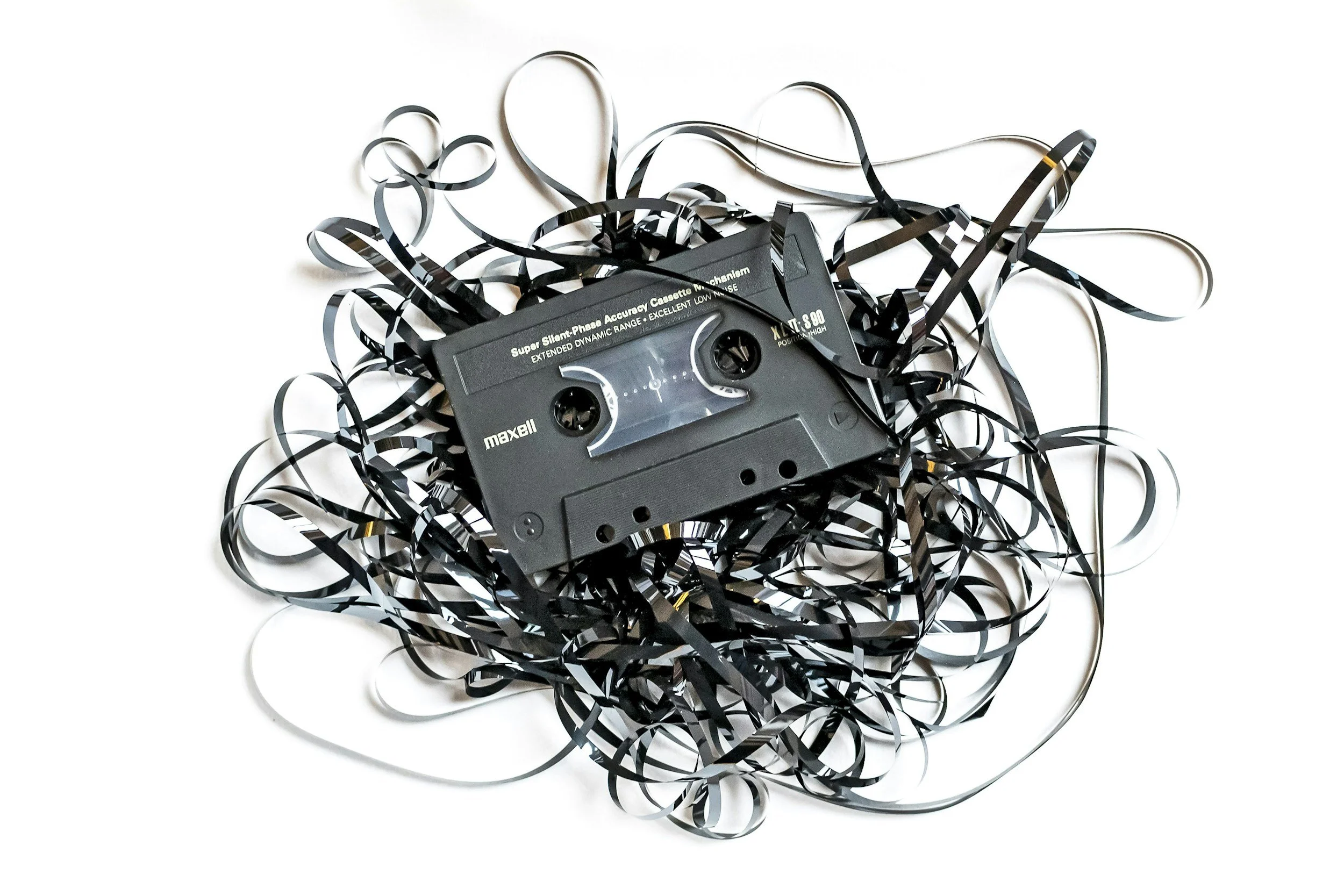
Creating in the "Not Ideal" Times
That is the heart of Room to Breathe Studio. We believe in the value of a creative practice not when conditions are perfect, but fitting within the framework of our lives no matter how crazy and overwhelming things get.
What matters is the commitment to try now. Not when things are ideal. Not when you feel your absolute best. Not when the world finally aligns and you feel "allowed" to be creative.
We’re starting this venture at a precarious time in our life and gestures vaguely to the world everything else. There may never be a perfect moment to launch a business, but there are certainly "not ideal" times. Yet, the reality is simple: if we don’t do the thing, the thing never happens. Even when the timing is off, and even when the weight of the world feels heavy, we have to move forward.
That is the heart of Room to Breathe Studio. We believe in the value of a creative practice not when conditions are perfect, but fitting within the framework of our lives no matter how crazy and overwhelming things get.
To be clear, we’re not advocating for "toxic productivity." If you are so immersed in burnout and overwhelm that adding one more thing to your plate might send you over the edge, this isn't the time. We’ve been there. Your practice needs to add to your life, not aggravate it.
However, if the yearn to create is there, if you can look at your to-do list and find even a tiny sliver of wiggle room, that is as good a place as any to begin. Whether you are a seasoned creative professional or someone who doesn't even have a medium yet, we’re here for you. We’ll hold your hand while giving you the occasional firm nudge to remind you that you can make space for yourself.
What matters is the commitment to try now. Not when things are ideal. Not when you feel your absolute best. Not when the world finally aligns and you feel "allowed" to be creative.
You are allowed to create when you’re tired. You’re allowed to create when the world seems to be teetering on the edge of collapse. We want creativity to be as consistent as brushing your teeth—even if, initially, that’s all the time you have to give it.
It won’t always be easy. What you make won’t be "good" right away. At first you may only create for five minutes 2-3 times a week. This is about creative practice, not creative perfection. The only real mistake is forcing what isn’t working because you think you "should," or trying to fix your creative blocks in total isolation.
If you’re ready to commit to trying, I’d be honored to help you get to a place where not only is your creative practice a vital part of your everyday life, it’s also something that brings you joy, refreshes you, energizes you, and keeps you wanting to explore and expand creativity into more parts of your life, and others’ lives.

Screens vs Scenery
We don’t want to discourage tech use entirely. We want to help you be more conscious. By making creativity a primary counteraction to screen time, you can cultivate a more balanced, fulfilled life.
Technology is not inherently bad. Nature is not inherently good. The purposes for which we use either are often far more subjective and nuanced than we like to examine. Physical retreats in "natural" settings that promote a digital detox can be inspiring, coupling a vacation with active creative engagement. However, they are also less physically and mentally accessible for many. This reality heavily influenced our choice to offer retreats virtually. We want to help creatives around the world, not just those with the means to travel.
We believe that the accessibility of a creative retreat should not depend on location, travel finances, or physical ability. As people who live with chronic illness, we understand that fluctuations in energy and physical capabilities are unpredictable. It is impossible to get the best experience out of a retreat if a flare-up hits, which is why we allow for flexible rescheduling.
We have crafted our virtual retreats to maximize benefit without requiring participants to spend hours staring at a screen. We build in movement breaks, offer alternative timings, and focus on your individual needs and tolerances to minimize distractions while keeping you engaged without exhausting you.
Screen time can have lasting detrimental effects on our attention spans and cognitive functions. Our brains are being retrained by platforms designed by mega-corporations to keep our eyeballs glued to screens, keeping our cortisol levels elevated and dopamine imbalanced. It is telling that many tech executives send their own children to tech-free schools because they are well aware of how their products are designed to be addictive. We scroll and consume, diving into a digital ocean of unknown depths where the monsters are waiting to keep us underwater as long as possible.
But our bodies can adapt and heal. One of the best ways to reclaim our focus is through creative outlets—making things, experiencing art, and engaging with practices that free our minds from the trap of endless short-form content.
Advocating for this on corporate platforms is a paradox, but until we can thrive without these digital connections, it is a necessary path. This is all the more reason to invest in a retreat that, while held on a screen, works with you personally to build a practice where devices become tools for connection and inspiration instead of ‘escapes’ that aggravate more than they nurture.
Sometimes the screen is necessary. Play is vital, and if a video game is a source of joy, embrace it. Connection is necessary, and if an online group offers a genuine exchange of ideas, join it. Accessibility is fundamental, and if apps help you function, keep them. We don’t want to discourage tech use entirely. We want to help you be more conscious. By making creativity a primary counteraction to screen time, you can cultivate a more balanced, fulfilled life.
But also, fuck using ai to create. That’s not creating. That’s using a bot to steal creativity from others and shielding yourself from the essential discipline, learning, discovery, and inherent humanity of creativity.

Why a Virtual Retreat (Built for YOU) Matters
That’s what we want to help you find — the ability to create consistently and sustainably while life keeps happening around you. Not a once in a lifetime escape to try and capture moments to possibly fuel you for a short time after the experience.
Is it not incredible to be able to say, “I’m going to a retreat at an Italian villa for a week to paint!”?
Of course it is. We’re not trying to take anything away from that experience, especially if it works for you. Especially if the vacation is needed. Especially if you’re supported in your creative work before, during, and after the retreat.
Unfortunately, it’s not always the break, vacation, or lasting inspirational journey we need. Post-retreat crash and malaise are common, not the least of reasons being there’s rarely any support of your craft after the retreat ends. There might be a friendly check in from the folks you attended with. And a plug for the next retreat of course. But rarely does anyone follow up in the weeks after to see what you’re working on now, how that new painting schedule you proclaimed on a sun-soaked terrace was absolutely going to stick because of all the inspiration you’ve found is going.
Inspiration is great.
It’s also unreliable. And fleeting. Building skills and consistency based on inspiration alone is never sustainable.
So why do it this way?
One day, we hope to have a physical retreat space (or several, we can dream). We know that the screen can be a barrier for some folks and deep, personal moments are often more difficult to achieve in a short span of time via webcams.
However, we want to be as accessible as possible to anyone wanting to experience our services, without spending even more money and time on travel.
Virtual retreats are also more accessible for those who struggle with in person meetings, physically and/or mentally. For some, a chronic condition or disability might make not only the travel to but experiences planned at a gorgeous villa with mountain views unattainable due to accessibility limitations. For others, small group retreats create more anxiety than space — whether it’s the ‘freedom’ of an unstructured retreat for those needing set schedules, or the possibility of personality clashes with fellow attendees, or the retreat guide(s), or an inability to feel comfortable creating in a space with people they don’t know, freezing their creative muscles in a place they should be able to relax.
The alternative: a retreat built for you — just you.
There’s a lot of issues that can sour the group travel experience when a) you don’t know anyone else in attendance and b) the retreat experiences sound good in theory but ultimately are designed to make group activities easy (and the addition of excursions, sharing time, meals, etc.) for the organizers. Any good retreat organizer wants to ensure their attendees have a good time, but at the end of the day, you’re there for the experience they have curated, not one you helped curate for your specific needs, goals, projects etc.
That’s different with us. We work with you to build a retreat that has structure, but ultimately is about you.
You may love hiking. Most of us could use a refreshing walk to fire up the creative synapses on a more frequent basis, but is that really something you want to pay for during a time when you’re not only supposed to find inspiration but be able to capture that experience and carry it with you beyond the hike, beyond the group meal where we reflect on it, and beyond the couple photos snapped at the top?
Movement, getting out in nature, and using it as fuel for your work all helps cultivate creativity. But is the group walk also addressing what’s keeping you from engaging with your creative practice and projects once you’re back home, staring at a blank page or canvas or guitar or pile of art supplies you haven’t touched in months?
Crafting a retreat for you, personally, designed for your needs, your goals, your life circumstances, we believe is a valuable investment. And we absolutely include moments of fun, exploration, revelation, and movement. But in a way that suits you best (and a time that does, too).
That’s what we want to help you find — the ability to create consistently and sustainably while life keeps happening around you. Not a once in a lifetime escape to try and capture moments to possibly fuel you for a short time after the experience.
We lift you up during your retreat, set up goals for after, and actually follow up with understanding and compassion if those goals haven’t settled into your everyday life. We want your creative practice to become as natural a routine as brushing your teeth, and we’ll help you find adjustments so creating doesn’t feel like a chore.